
Case study
Sri Charge
A design-led EV charging & booking platform for Sri Lanka, built to end the queue.
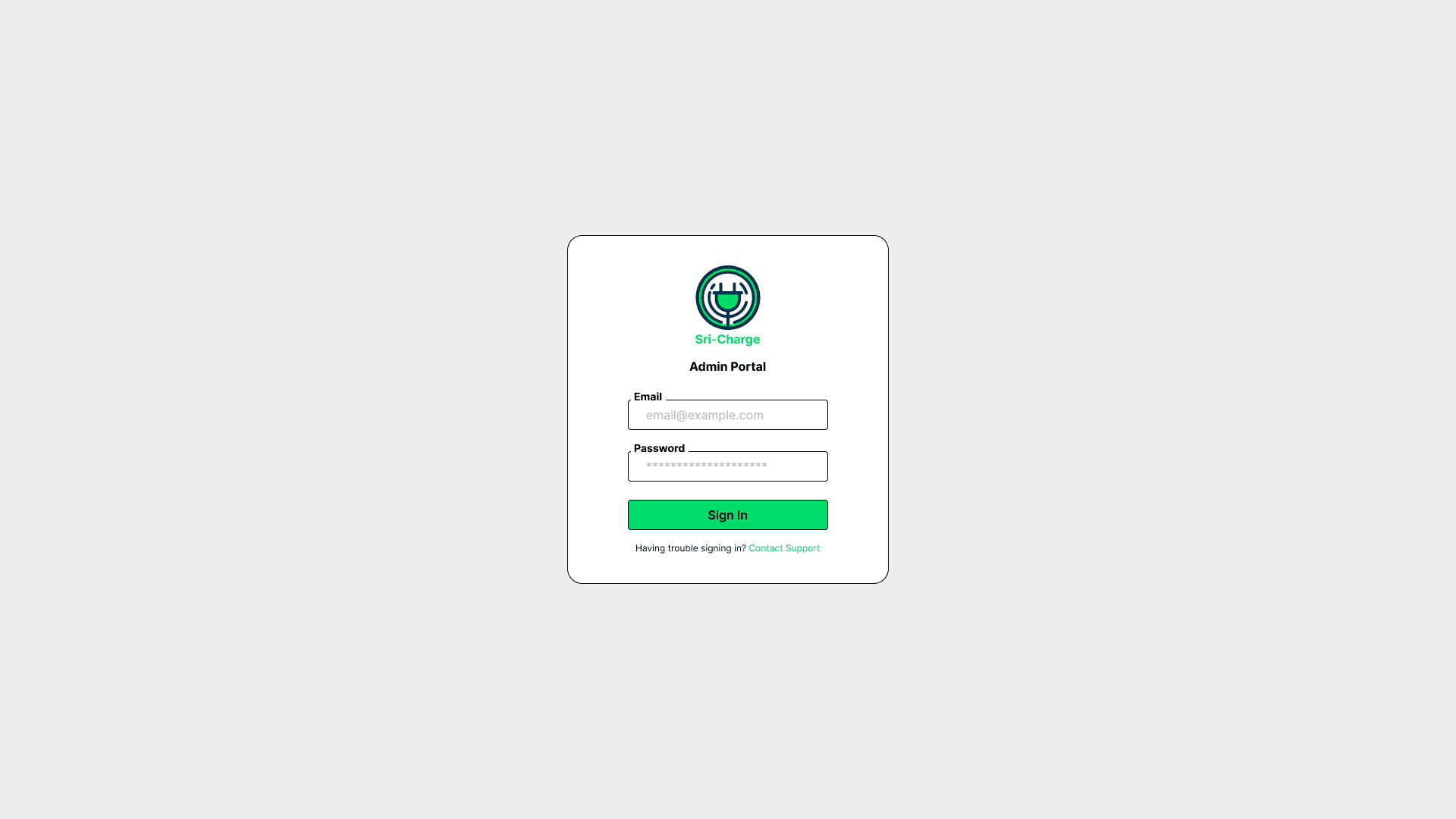
At a glance
- Role
- Lead Designer (product design & UI) — build supported by collaborating developers
- Status
- Design complete; core end-to-end flow (find + book a charger) built as a working MVP
- Platform
- React Native (mobile app)
- Tools
- Figma
- Tech stack
- React Native · Figma
Sections
Section 1
The Problem
Electric vehicle charging stations exist across Sri Lanka, but there's no way to reserve one ahead of time. Drivers arrive without knowing whether a charger will be free, leading to long queues and unpredictable wait times — a friction point that undermines confidence in EV ownership as adoption grows.
Section 2
Approach
Led the design process end-to-end: user research, journey mapping, and high-fidelity UI, working alongside developers who built out the app.
- Researched how EV charging actually works in the Sri Lankan context — station types, operating models, and driver behavior — since off-the-shelf EV app patterns from other markets didn't map cleanly onto local conditions.
- Mapped user flows for the two core jobs: finding a nearby station and booking a charging slot in advance.
- Designed a station categorization system to structure how stations are organized and filtered, covering ownership, power type, automation level (manual/caretaker vs. semi- or fully-automated), plug types, capacity, and amenities.
- Produced high-fidelity UI screens and a lightweight design system (color, type, components) to hand off for development.
Section 3
Key Decisions & Challenges
- Charging stations in Sri Lanka vary widely in how they're run — some are caretaker-operated, others semi- or fully-automated — so a flat "map of pins" model wasn't enough. The categorization system was designed to surface this variation to users in a way that's simple to scan.
- Booking needed to reflect real-world availability and queuing, not just station location — this shaped the flow beyond a typical "find on map" pattern.
- Kept the core flow tightly scoped (map + booking) rather than designing the full feature set up front, so there was a clear, buildable slice for the MVP.
Section 4
Outcome
Delivered a complete set of user flows, a station categorization framework, and high-fidelity UI for the core experience. Using these designs, the development team built a working end-to-end flow for finding and booking a charging station, validating the core product concept as a functioning MVP.
Links
Source available on request.
Request source accessMore projects
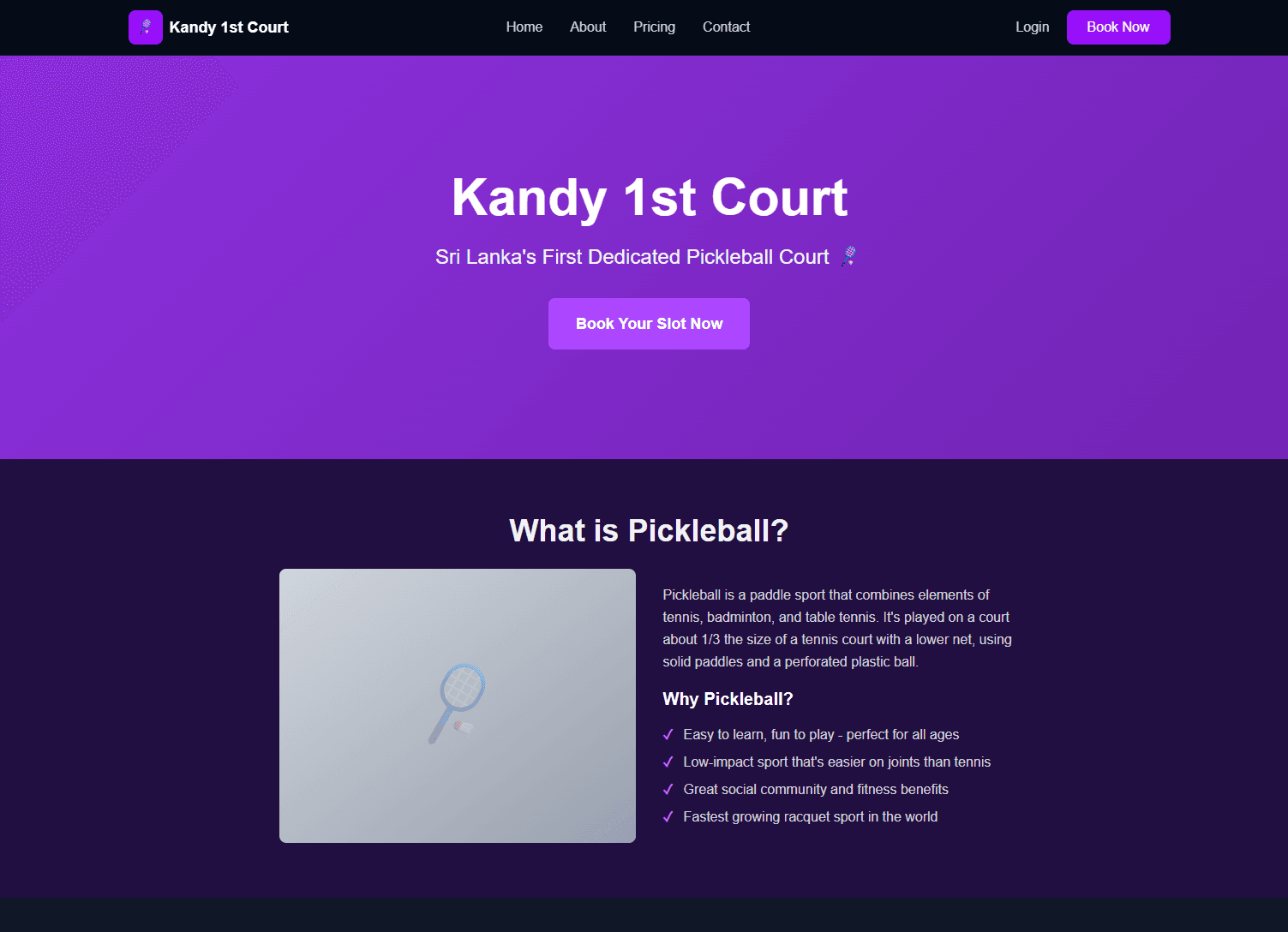
Kandy 1st Court
A full-stack booking platform for Sri Lanka's first dedicated pickleball court, built end-to-end by directing Claude Code, not by hand-coding or blind-accepting it.
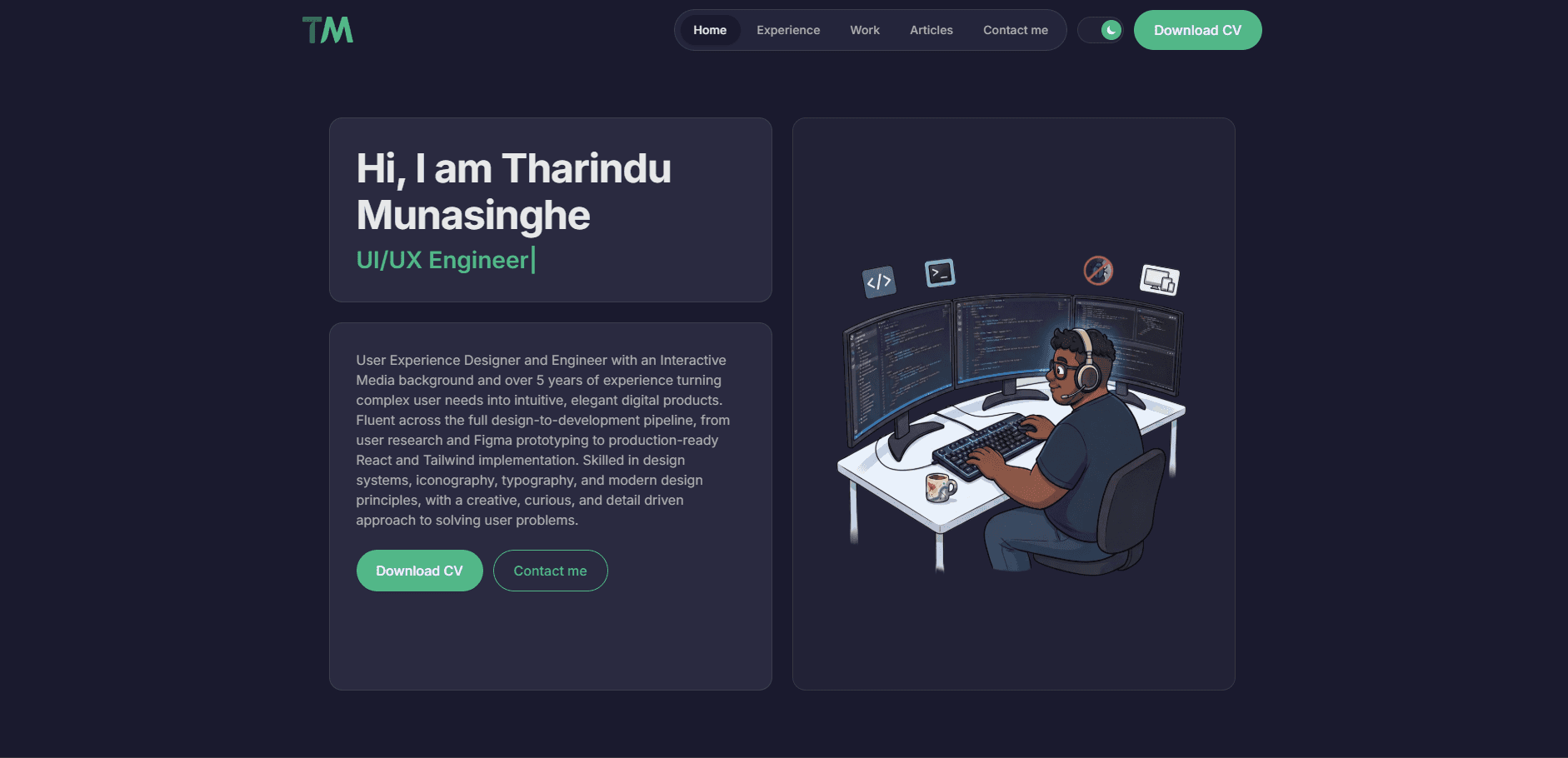
This Portfolio
This very site: a personal portfolio designed and built end-to-end with Claude Code assisting, one real feature at a time.
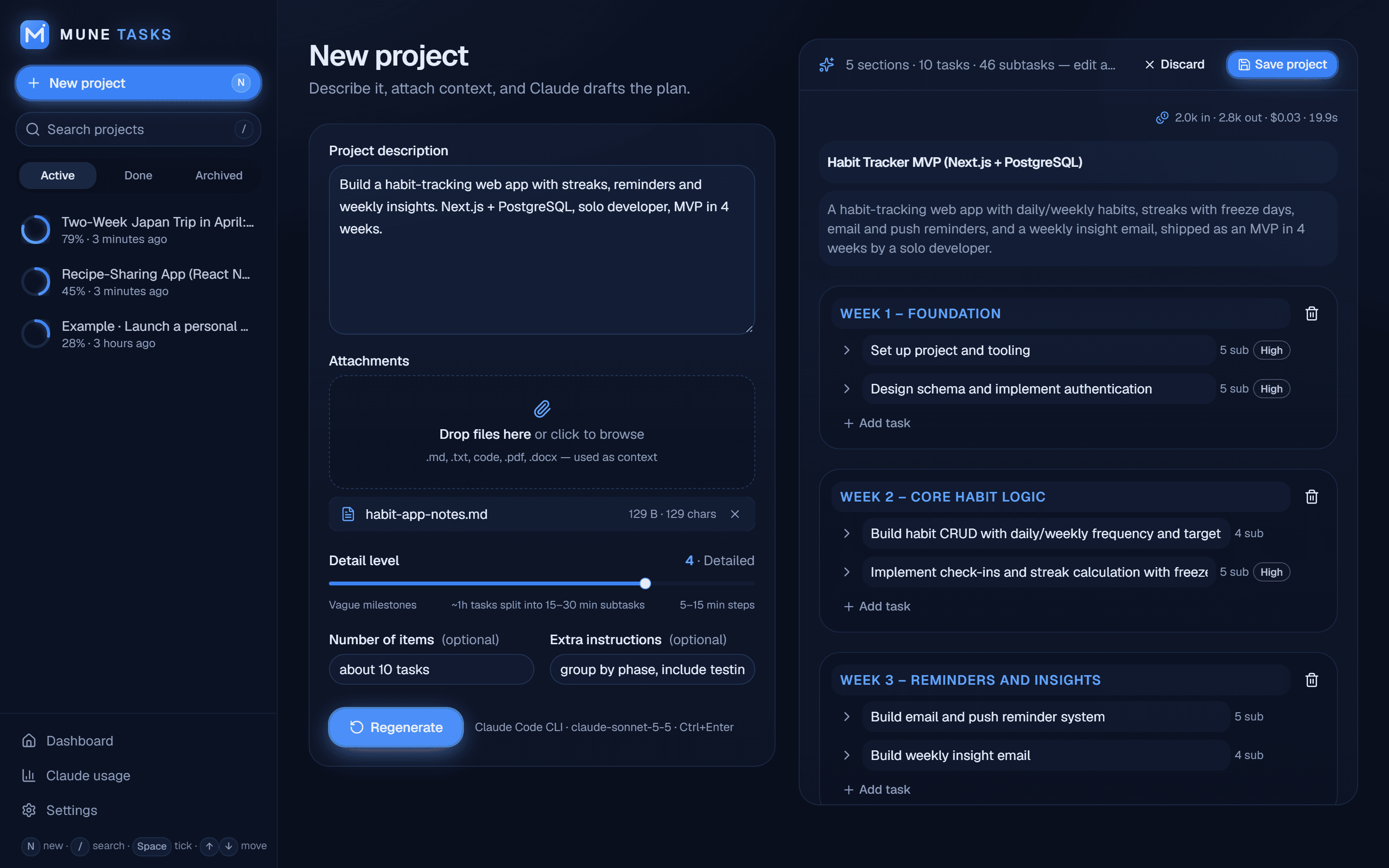
MUNE TASKS
A local-first AI project planner that turns a description into a phased, trackable to-do list in about 20 seconds.
MUNE Splits
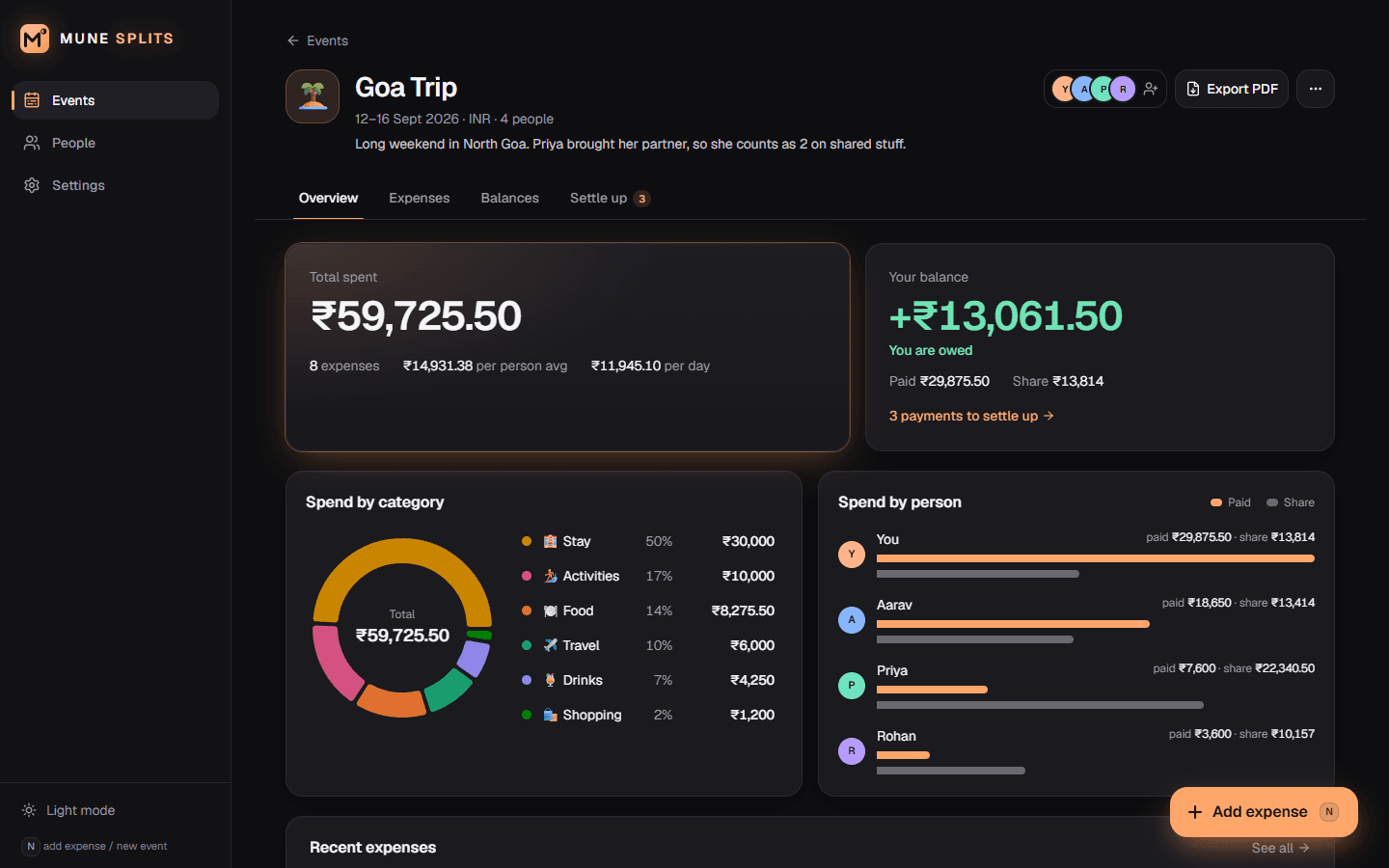
A local-first expense splitter that works out who owes whom in the fewest possible payments.